

From Khelcom, Senegal to Öland, Sweden
15-november-2026 – On the 20th of January 2026, an adult male Montagu’s harrier was captured in Senegal by the Senegalese field assistant Albert Dely Faye and our Dutch Montagu’s harrier colleagues from Grauwe Kiekendief – Kenniscentrum Akkervogels. During the capture, they discovered something remarkable: the male was already ringed by the Swedish Montagu’s harrier Project on Öland, Sweden’s second-largest island and home to 65-70% of the country’s endangered Montagu’s harrier population.
Albert had originally been ringed as a nestling in 2021, together with two siblings, in a nest protected by the Swedish Montagu’s harrier Project. Five years later, he was spending the winter thousands of kilometers away in northwestern Africa. He was named Albert after the local field assistant who helped capture him and was fitted with a GPS transmitter, allowing us to follow his journey north.
Migratie Albert
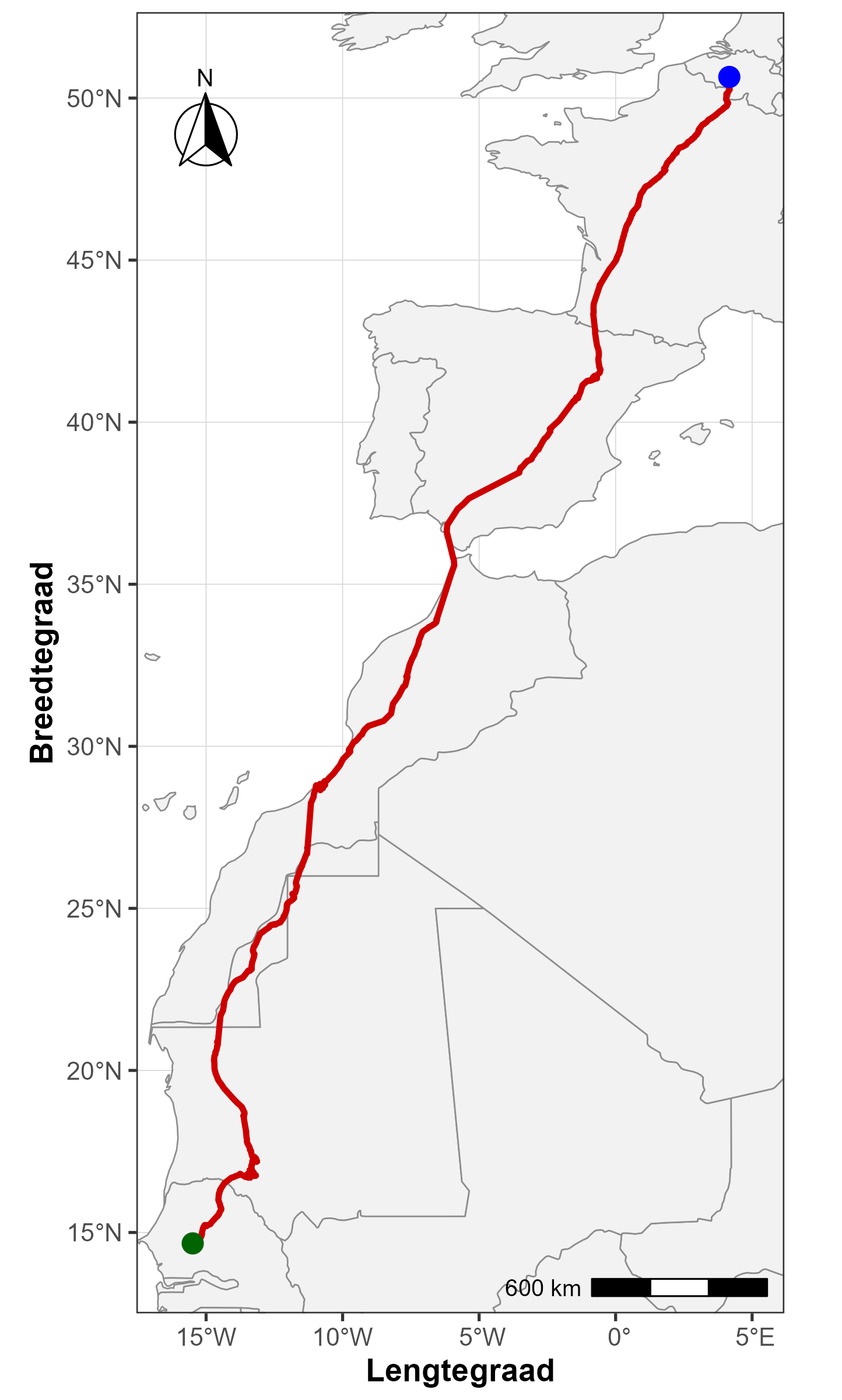
During spring, Albert migrated north along the Moroccan coast before crossing into Europe via Spain, France, Belgium and the Netherlands. He then made a sharp turn east across Denmark and reached the southern Swedish coast. Surprisingly, Albert continued straight past Öland to Sweden’s largest island, Gotland, located northeast of Öland. Gotland also holds a small part of the Swedish breeding population of Montagu’s harriers. However, less than half a day later, Albert quickly turned southwest and returned to Öland, where he settled in the southeastern part of the island.
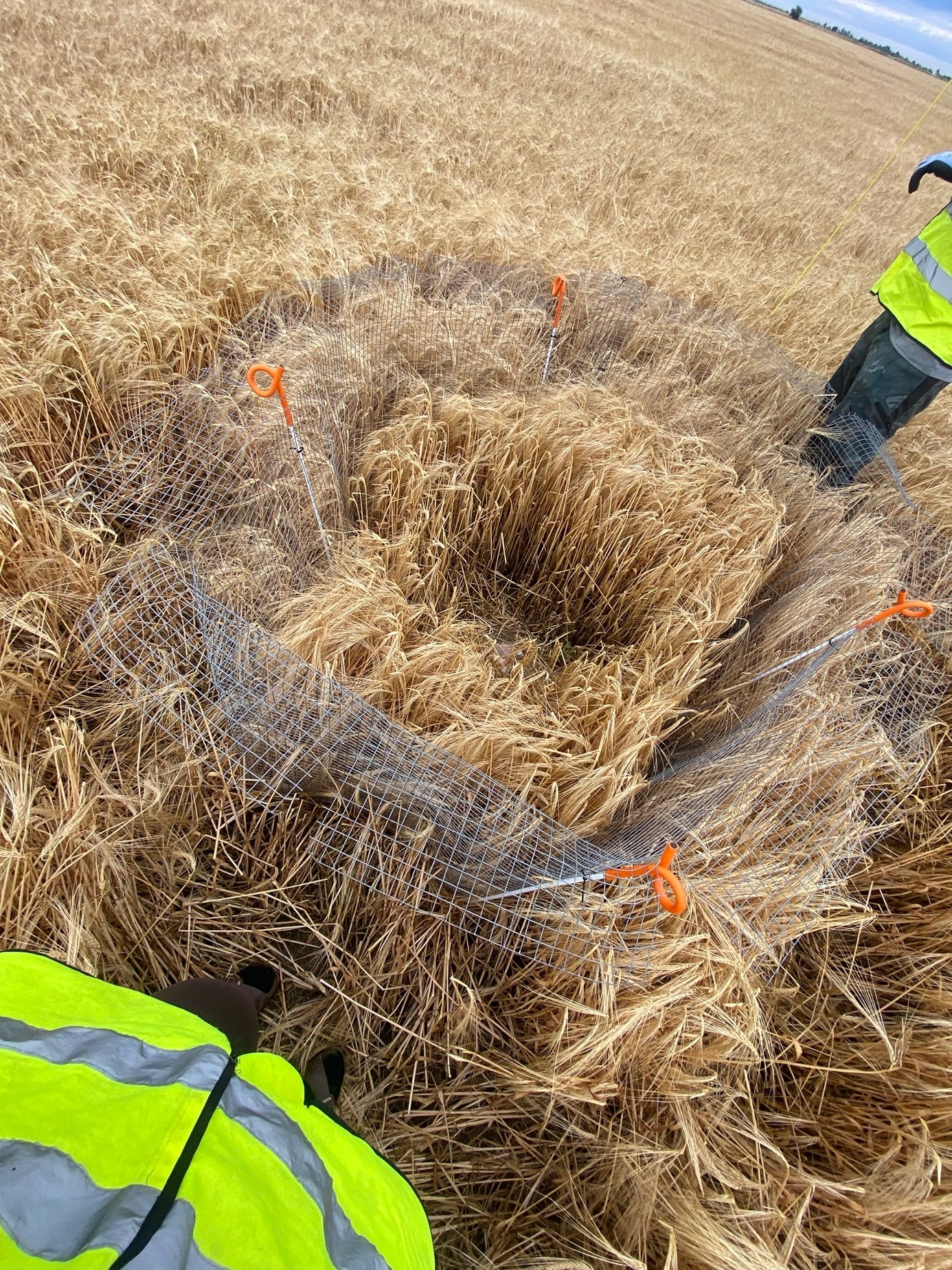
Albert met his female in early May, and pair formation, display flights and nest building continued for several weeks. However, it took longer than average for Albert’s young female, probably a third-calendar-year female, to lay her first egg. Unfortunately, the lucerne field where they had chosen to nest was harvested before she had laid. The pair quickly moved several kilometers northwest and settled in a winter barley field, just a few hundred meters away from three other breeding pairs. Around the first week of June, the female laid three eggs. The pair was closely monitored throughout the breeding season, mainly using a drone equipped with a thermal camera. By the 10th of July, two chicks had hatched. Before the farmer’s harvest, the Swedish Montagu’s harrier Project protected the nest with a metal net, allowing the chicks to remain safely in the field.
Zweedse nestbescherming
J3 en J5
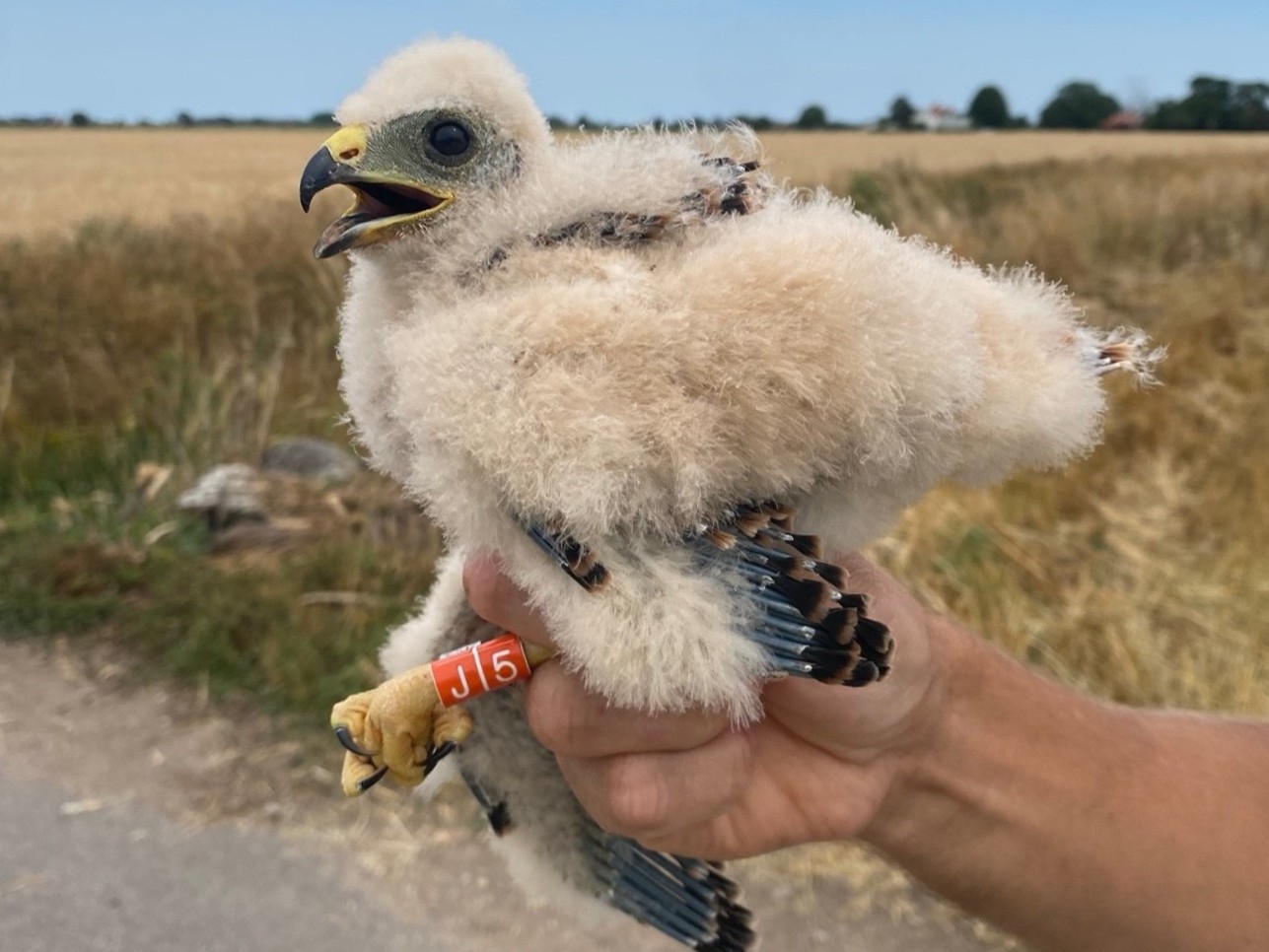
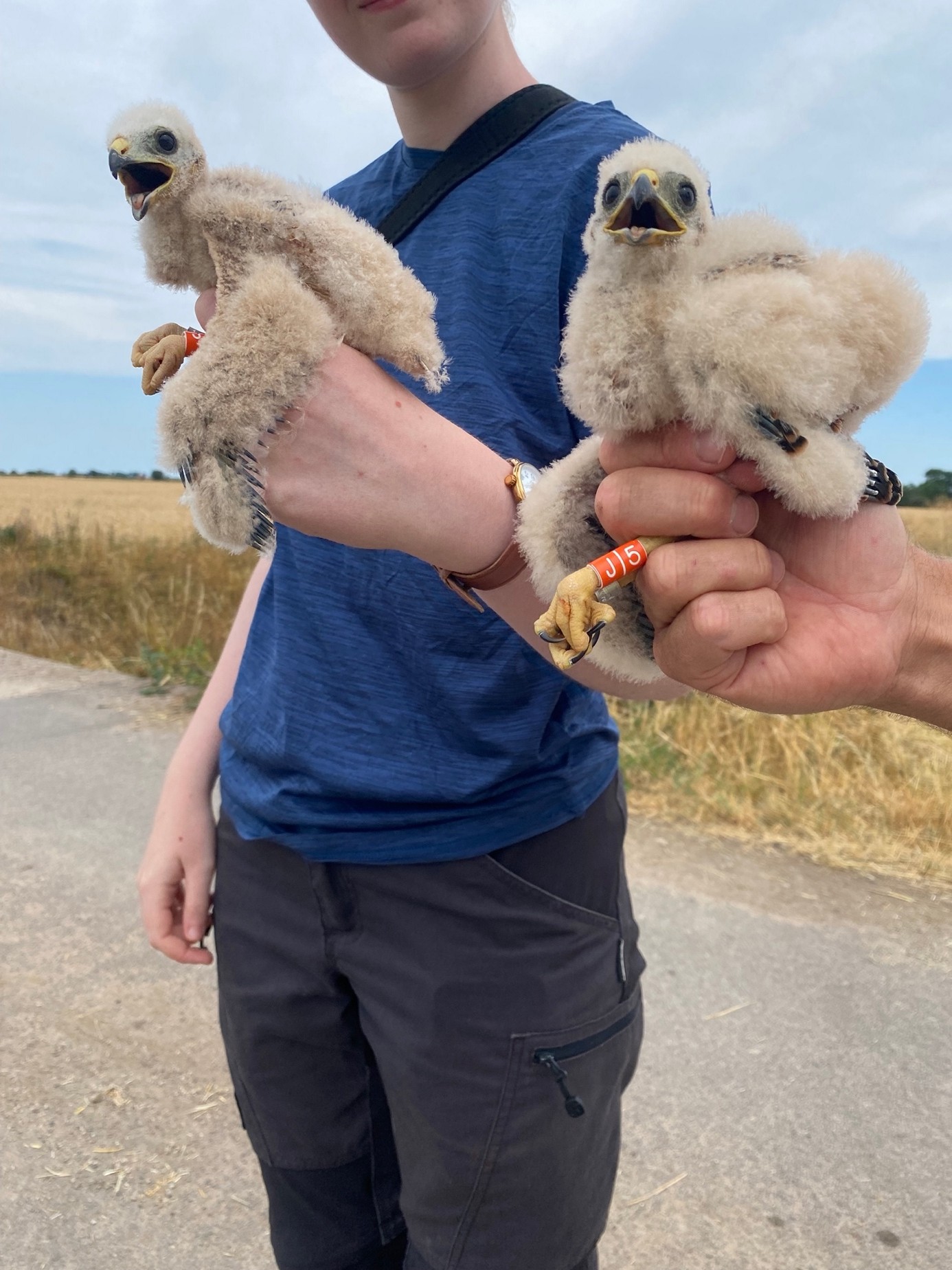
The breeding attempt continued successfully under close monitoring, and on the 17th of July, Albert’s two chicks were ringed. It turned out that Albert had fathered two female chicks. They were named J2 and J5, after the orange colour rings used by the Swedish Montagu’s harrier Project to monitor the population over time. J2 and J5 continued to grow, practicing flying together before eventually leaving the nest site and setting off on their own adventures. Their successful fledging meant that Albert’s two chicks became two of the 88 Montagu’s Harrier chicks to fledge on Öland during the 2026 breeding season.
Whether Albert will return to Khelcom to spend the winter remains to be seen. Wherever he goes, we hope he will return safely in 2027 ready to raise another brood. And if he does return, the Swedish Montagu’s harrier Project will be ready to protect Albert and the next generation of Montagu’s harriers.
Author: Clara Lindström, Coordinator of the Swedish Montagu’s harrier Project.
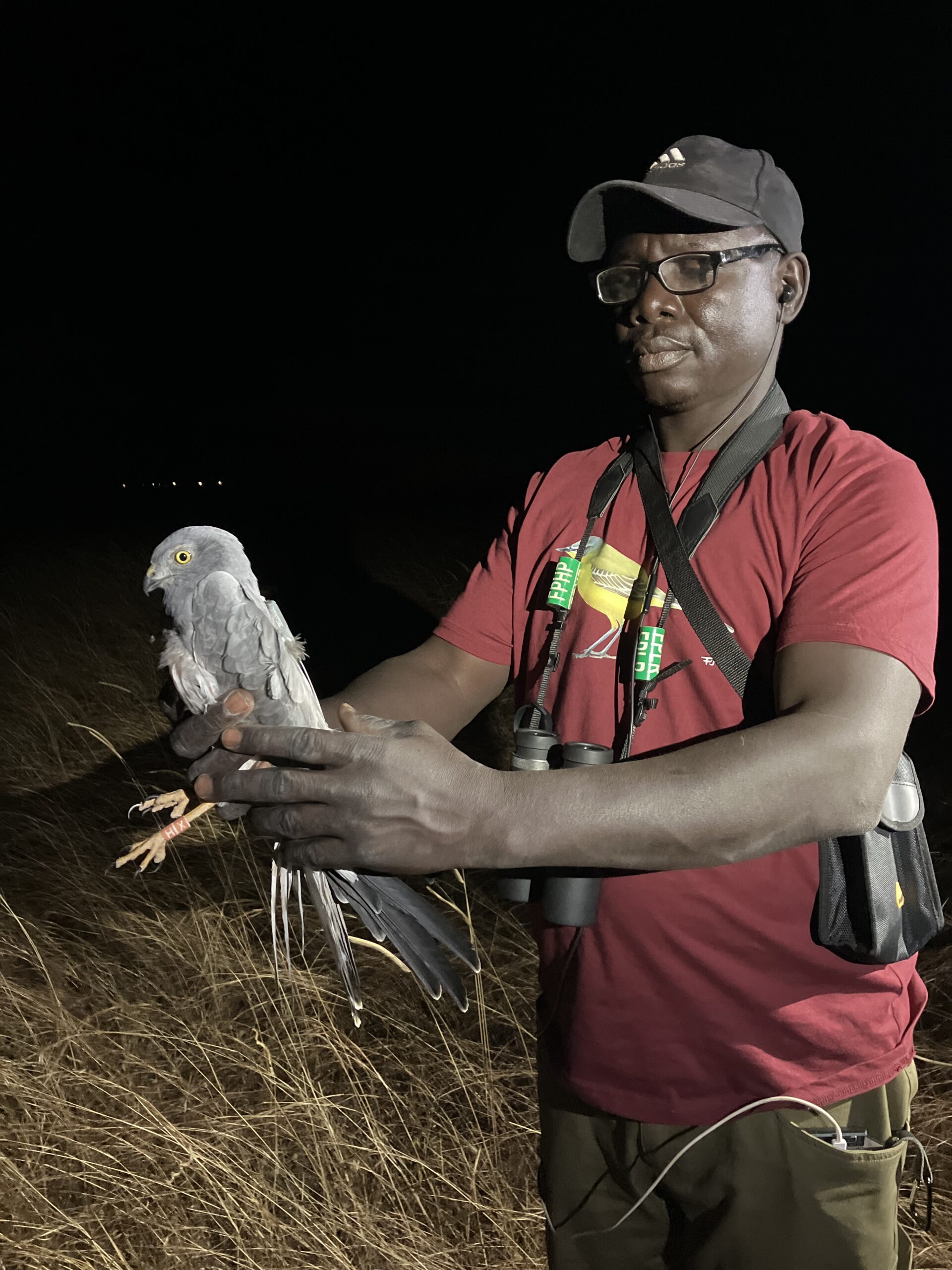
Albert and Albert
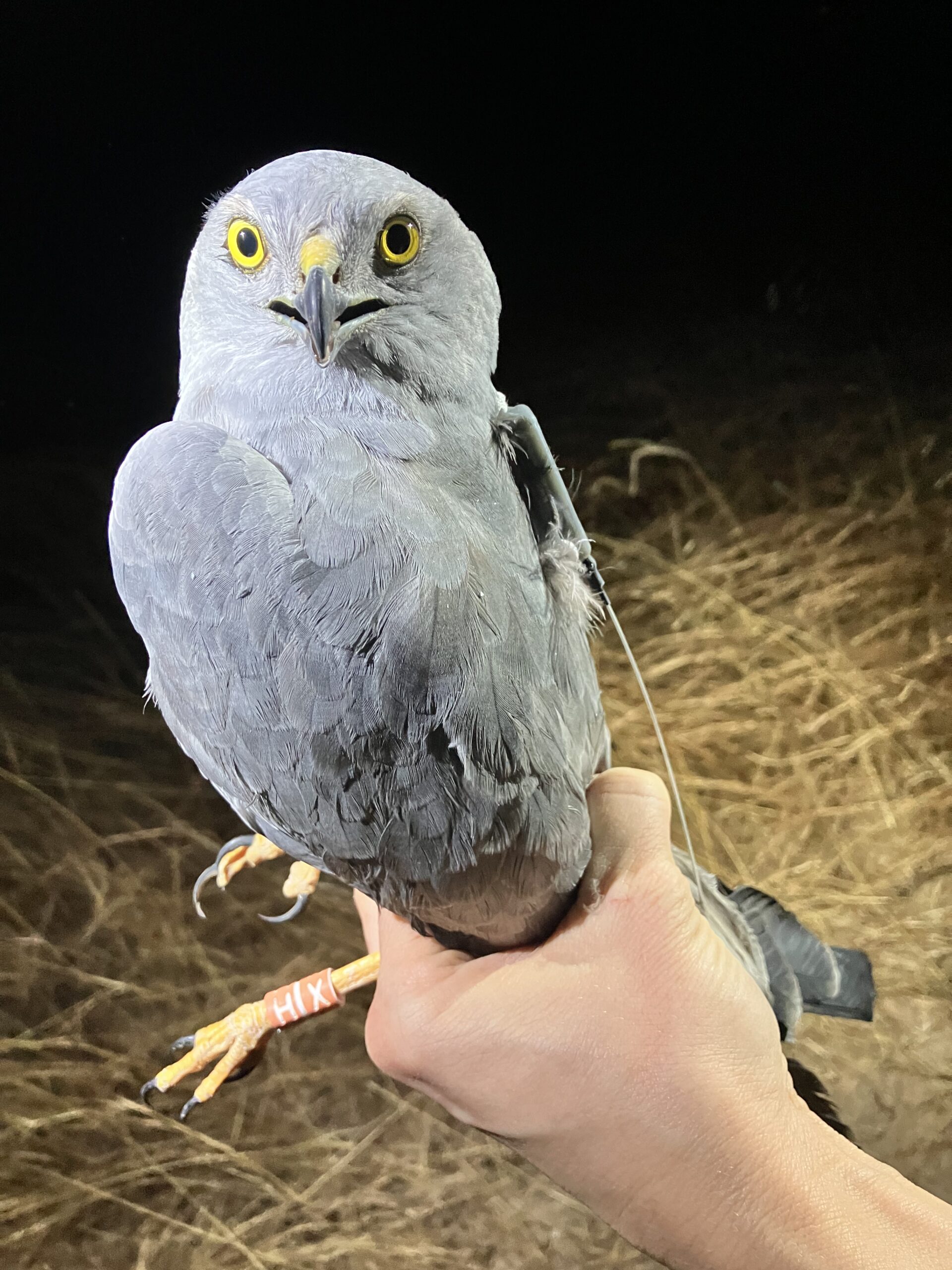
Albert